Artificial intelligence is already being abused by bosses to carry out Orwellian surveillance of workers and must be regulated to ensure it respects workers’ rights, MEPs were told today.
Speaking at a European Parliament hearing on digitalisation at the workplace, ETUC Confederal Secretary Giulio Romani said that the risks linked with artificial intelligence are no longer emerging but are already widespread and contributing to Europe’s escalating stress epidemic.
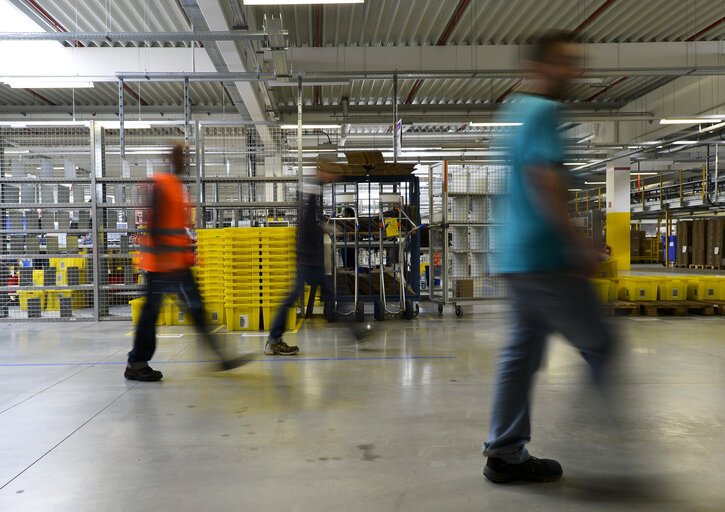
He cited the examples of call centre workers whose tone of voice is now monitored by AI, and warehouse workers being put at risk as they struggle to keep up with automated productivity targets. “Algorithmic systems determine work pace and track every movement, leading to increased stress, fatigue, and even higher injury rates,” he warned.
The European Trade Union Confederation is calling for binding legislation to protect workers against psychosocial risks to be included in the forthcoming Quality Jobs Act, along with an AI at work act which should ensure:
Speaking at the European Parliament, ETUC Confederal Secretary Giulio Romani said:
“Digital technologies, including artificial intelligence and algorithmic management, are transforming the workplace at an unprecedented pace. While they offer opportunities, such as increased flexibility and improved productivity, they are also creating new and significant risks for workers’ mental health and well-being.
“The current EU framework remains insufficient. Guidance alone is not enough. Psychosocial risks are still too often treated as an individual issue rather than a structural one linked to work organisation.
“This is why the ETUC calls for a stronger European approach. We need binding legislation to address psychosocial risks in the context of digitalisation, with clear employer responsibilities, mandatory risk assessments, and stronger rights for workers’ information, consultation and participation.
“Digitalisation must not come at the expense of workers’ health. With the right rules and governance, it can improve working conditions. Without them, it risks deepening inequalities and undermining well-being.”
Photo: European Union/Guenter Schiffmann